
EV Charger Maintenance: Build an In-House Program That Protects Uptime
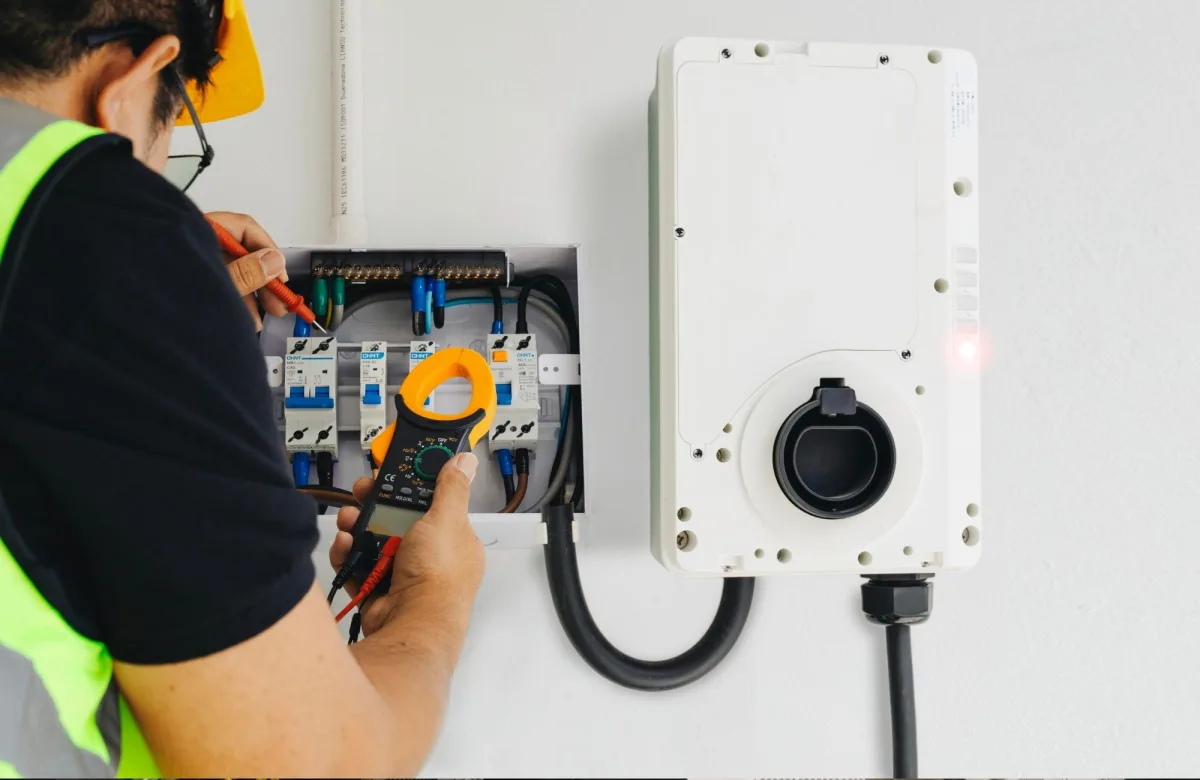
Keeping commercial EV chargers available takes more than fixing equipment when it fails. Your maintenance team needs a clear process for inspecting chargers, spotting cable and connector damage, monitoring connectivity and firmware, troubleshooting common problems, and knowing when to escalate specialized work.
For facilities, fleet, utility, and campus teams, the goal is not to bring every repair in-house. It is to build enough first-line capability to catch problems early, reduce unnecessary downtime, and get the right people involved when a fault requires specialized expertise.
EV charger maintenance training can help your technicians build that foundation. It should complement manufacturer procedures, site-specific safety requirements, and clearly defined boundaries for electrical and specialized work.
What Should an EV Charger Maintenance Program Cover?
A practical EV charger maintenance program should address at least these areas:
-
Physical condition: Cables, connectors, enclosures, screens, mounting hardware, cable management, and visible damage
-
Environmental conditions: Moisture, corrosion, dirt buildup, blocked ventilation, extreme temperatures, and other site conditions
-
Electrical and mechanical condition: Loose connections, signs of overheating, damaged components, abnormal breaker behavior, and specified torque checks
-
Connectivity and software: Network status, error codes, charger communications, software glitches, and firmware
-
Functional checks: Charger status, charging sessions, power delivery, and communication with the network or management platform
-
Documentation and escalation: Inspection findings, repairs, repeat failures, unavailable ports, and issues transferred to a manufacturer or service provider
The U.S. Department of Energy’s guidance on EV charging infrastructure operation and maintenance recommends regular equipment checks, cable management, cleaning, troubleshooting procedures, and clearly assigned maintenance responsibilities.
For organizations managing multiple charging stations, these checks should be built into a scheduled maintenance program with defined procedures, responsibilities, and escalation paths.
Why EV Charger Uptime Matters
Charger reliability is not just a maintenance concern. For some charging projects, uptime is a measurable operating requirement.
For charging infrastructure covered by 23 CFR Part 680, 23 CFR 680.116(b) requires states or other direct recipients to ensure that each charging port has average annual uptime greater than 97%. The requirement applies to NEVI projects and other covered federally funded charging projects. It does not automatically apply to every commercial EV charging site.
For covered projects, that makes uptime a defined performance requirement. For commercial charging operators outside the NEVI program, the 97% threshold does not automatically apply, but uptime can still shape service-level agreements, maintenance contracts, response-time expectations, and internal reliability targets.
That makes reliability worth tracking alongside maintenance activity. Facilities, fleet, utility, and campus teams can use measures such as failures, response times, repeat issues, and time to restore service to identify where their maintenance program needs improvement.
Define Maintenance Ownership First
Before setting monthly or quarterly inspection schedules, decide who owns each type of problem. A commercial charging site may involve facilities or maintenance, internal electricians, the equipment owner, the charger manufacturer, the charging network provider, IT or cybersecurity, electrical contractors, and third-party service providers.
Document these responsibilities for each charger model, including warranty status, support contacts, maintenance contract coverage, approved internal tasks, work restricted to qualified electrical personnel, and manufacturer-only procedures.
Clear ownership matters because a charger can stay offline longer than necessary when nobody knows whether a fault belongs to facilities, IT, the charging network, or the equipment manufacturer. A trained technician does not need to repair every failure. They need to recognize the likely fault category and route it to the right resource.
Use a Preventive Maintenance Plan Based on the Equipment
There is no single maintenance interval for every EV charger. Set the schedule based on the manufacturer’s requirements, charger type, utilization, site conditions, equipment history, and applicable safety and electrical requirements.
The following checklist is a planning example. Manufacturer requirements and your organization’s approved procedures should control the final schedule.
| Interval | Maintenance Task | What Technicians Should Look For |
|---|---|---|
| Monthly | Inspect cables, connectors, enclosure, display, mounting, and cable management | Cracks, abrasion, impact damage, contamination, corrosion, loose hardware, or vandalism |
| Monthly | Review charger status, alerts, and error codes | Repeated faults, offline ports, failed sessions, or connectivity issues |
| Monthly | Check the surrounding area and ventilation openings | Dirt buildup, debris, moisture, blocked airflow, or physical hazards |
| Quarterly | Clean exterior surfaces according to manufacturer instructions | Contamination that could affect inspection, cooling, or operation |
| Quarterly | Inspect cables, connector strain points, holsters, and mounting more closely | Wear from dragging, pulling, impact, or repeated use |
| Quarterly | Verify charger-to-network communication | Incorrect status reporting, intermittent connectivity, or recurring communication faults |
| Annual or manufacturer-specified | Inspect internal electrical and mechanical components where permitted | Loose connections, heat damage, deterioration, or abnormal component condition |
| Annual or manufacturer-specified | Verify specified torque values where required | Connections outside manufacturer specifications |
Inspect Cables and Connectors Closely
Charging cables and connectors experience frequent handling and environmental exposure. They may be dropped, dragged across pavement, driven over, twisted, pulled beyond their normal range, or exposed to moisture, dirt, ice, heat, and road contaminants.
Routine visual inspections should look for cracked housings, damaged insulation, connector damage, contamination, excessive wear, and deterioration around strain-relief points.
Cable management also matters. The Department of Energy includes secure cable storage and periodic equipment checks among its EV charging maintenance considerations.
If a cable or connector shows physical damage, your maintenance procedure should specify when the charger must be removed from service and who is authorized to inspect or replace the component.
Account for Environmental Conditions
Outdoor EV charging stations operate under conditions that can change throughout the year.
Maintenance teams may need to account for:
-
Rain and moisture
-
Heat and direct sunlight
-
Snow and ice
-
Salt exposure
-
Dust and debris
-
Insects
-
Flooding
-
Vehicle impact
-
Vandalism
These conditions can affect enclosures, seals, connectors, screens, cooling systems, and internal components. Technicians should look for damaged seals, corrosion, moisture intrusion, blocked ventilation, enclosure deformation, or other signs that the environment may be affecting equipment functionality.
DC fast chargers deserve particular attention because higher-power equipment can rely on more complex cooling systems. Poor ventilation or restricted cooling can contribute to overheating, reduced charging speed, or charger shutdowns.
Training can help technicians recognize these environmental risks as part of routine maintenance. ITC Learning’s EV Charging Skills courses include Impact of Environmental Conditions, which covers how site conditions can affect EVSE performance.
Include Electrical and Mechanical Connection Checks
Electrical and mechanical connections can affect charger reliability when they loosen, deteriorate, or overheat. Your maintenance program should include checks for visible warning signs such as discoloration, heat damage, unusual odors, repeated breaker trips, or intermittent charging.
When connection work is required, follow the charger’s specified torque values and procedures instead of relying on feel. Your maintenance plan should also define which connection checks your team can perform and which require qualified electrical personnel or manufacturer support.
Treat Connectivity as Part of Maintenance
A charger can be physically intact and still be unavailable because of a connectivity problem. Your maintenance program should therefore include basic checks of network status, communication alerts, online or offline reporting, failed charging sessions, and communication with the site’s approved management platform.
Not every connectivity issue is a hardware problem. Backend configuration, account issues, and provider-side outages should have a defined escalation path so technicians do not spend time troubleshooting equipment that is working correctly.
For sites that depend on networked charging, make connectivity checks part of the regular maintenance routine alongside physical and electrical inspections.
Manage Firmware and Cybersecurity Deliberately
Firmware updates can affect charger functionality, communications, compatibility, and security. Your maintenance procedure should define who approves updates, who performs them, how successful operation is verified afterward, and when a failed update is escalated to the manufacturer or network provider.
Cybersecurity should be part of that same maintenance boundary for network-connected chargers. NIST’s Cybersecurity Framework Profile for EV Extreme Fast Charging Infrastructure recognizes the connections among charging equipment, vehicles, cloud systems, and utility or building networks.
Your maintenance team does not need to own cybersecurity operations. It should follow approved access and credential practices, use controlled firmware procedures, document configuration changes, and escalate suspicious network behavior.
Build a Consistent EV Charger Troubleshooting Process
When an EV charger stops working, replacing components should not be the first response. A structured troubleshooting sequence helps the team narrow the problem before escalating it.
1. Confirm the Problem
Determine what actually occurred. Was the charger completely offline? Did only one vehicle fail to charge? Did charging start and then stop? Was charging slower than expected? A reported broken charger may involve the vehicle, the charger, upstream power, the network, or another system.
2. Record Status and Error Codes
Review the display, indicator lights, network status, recent alerts, and available charging-session information. Record error codes before resetting the charger. That information may be important if the fault disappears temporarily after a restart.
3. Perform a Visual Inspection
Look for:
-
Cable or connector damage
-
Impact damage
-
Moisture
-
Signs of overheating
-
Blocked ventilation
-
Vandalism
-
Enclosure damage
Do not open equipment unless the technician is qualified and the approved procedure allows it.
4. Separate Power Problems From Connectivity Problems
Determine whether the issue appears to involve electrical supply, charger hardware, or network communication. A tripped circuit breaker, lost network connection, upstream power interruption, and software fault can produce similar user complaints but require different responses. Replacing faulty breakers or performing work inside electrical panels should remain within the scope of appropriately qualified personnel.
5. Follow Manufacturer Diagnostics
Use the correct documentation for the charger model. Error codes and diagnostic procedures are not universal. A code on one charger may mean something completely different on another.
6. Escalate When Necessary
Stop internal troubleshooting when the fault involves work outside the team’s qualifications or authority.
Examples include:
-
Warranty-controlled repairs
-
High-voltage internal components
-
DC fast charger power electronics
-
Proprietary component replacement
-
Backend payment problems
-
Network-provider configuration
-
Suspected cybersecurity incidents
-
Electrical work requiring additional qualifications
Define What to Handle In-House and When to Escalate
A hybrid approach is often more practical than trying to handle every maintenance and repair task internally. Your maintenance program should define which tasks the in-house team can perform and when a manufacturer, network provider, qualified electrician, or other specialist needs to take over.
| Maintenance Task | In-House Team | Escalate When |
|---|---|---|
| Visual inspection | Usually appropriate | Safety or structural damage is found |
| Exterior cleaning | Usually appropriate | Cleaning requires disassembly |
| Cable and connector inspection | Usually appropriate | Replacement or warranty work is needed |
| Review error codes | Usually appropriate | The fault points to proprietary repair |
| Connectivity status checks | Usually appropriate | A backend or provider-side fault is suspected |
| Basic functional testing | Usually appropriate | The charger fails the approved test sequence |
| Firmware updates | Depends on system | The provider controls deployment or warranty requirements apply |
| Internal electrical inspection | Qualification-dependent | Work exceeds technician authorization |
| Torque verification | Qualification-dependent | The connection is internal or warranty-controlled |
| Circuit breaker replacement | Qualified electrical work | Facility electrical procedures require additional support |
| DC fast charger power-module repair | Usually specialist work | Manufacturer or specialized service is required |
| Cybersecurity investigation | Recognition and reporting | IT, cybersecurity, manufacturer, or network provider needs to take over |
For each charger model, document the point at which an in-house check ends and outside support takes over. This prevents technicians from repeating basic checks on faults that require manufacturer, network, or qualified electrical support.
Document Maintenance and Track Reliability
Your maintenance records should make it possible to see what happened to each charger, what was done, and whether the same problem keeps returning.
Record the charger and port, location, date and time, technician, reported issue, error codes, inspection findings, work performed, parts replaced, firmware changes, escalation details, and return-to-service status.
Over time, these records can reveal recurring connector failures, common error codes, seasonal problems, connectivity issues, frequently replaced components, or chargers that require disproportionate service.
Track measures such as port uptime, repeat failure rate, preventive maintenance completion, time to acknowledge faults, time to restore service, and the percentage of issues resolved internally. Establish a baseline before setting targets, then use operating requirements, contracts, manufacturer guidance, and facility or fleet needs to determine appropriate goals.
Make the Boundaries More Actionable
Your maintenance program should define what technicians can inspect, troubleshoot, maintain, or repair and what work requires qualified electrical personnel or manufacturer support.
For each charger model, document which tasks are approved for your in-house team, which require qualified electrical personnel, and which must be escalated to the manufacturer or service provider. Include these limits in written procedures, so technicians know when to stop work and escalate.
For charging infrastructure covered by 23 CFR Part 680, 23 CFR 680.106(j) sets specific qualification requirements for electricians installing, maintaining, and operating chargers. Apply those requirements alongside your organization’s electrical safety program, lockout/tagout procedures, and applicable state and local requirements.
Build First-Line Capability Instead of Trying to Internalize Every Repair
Your maintenance team does not need to perform every EV charger repair in-house. The goal is to build enough internal capability to identify problems, complete approved first-line work, and escalate specialized issues without unnecessary delays.
A practical model is tiered capability:
Tier 1: Inspection and Recognition
Technicians perform routine visual and operational checks, identify physical damage, record error codes, and recognize conditions that require further investigation.
Tier 2: First-Line Troubleshooting
Trained technicians follow approved diagnostic procedures, review charger and connectivity status, perform permitted resets and functional checks, and determine when a fault needs escalation.
Tier 3: Specialized Maintenance
Qualified personnel handle work within their authorization, such as approved internal electrical checks, torque verification, component replacement, and advanced diagnostics.
Tier 4: Manufacturer or Network Support
External specialists handle work outside the organization’s scope, including proprietary repairs, warranty work, backend and payment issues, specialized DC fast charger repairs, and complex cybersecurity incidents.
Define these responsibilities for each charger model and site, then train technicians for the work they are authorized to perform.
Train Technicians for Your Maintenance Program
Give your maintenance team the training they need to inspect, troubleshoot, and maintain EV charging equipment safely and effectively. ITC Learning’s EV charger maintenance training helps you build first-line capabilities within your organization.
See EV Charger Maintenance Training.
Why Organizations Choose ITC Learning
-
50+ years developing skilled-trades training
-
1M+ learners trained
-
175+ courses · 450+ lessons
-
SCORM-compliant · Deliverable via ITC LMS or your existing platform
-
Available in English and Spanish
-
Supports manufacturers, industrial employers, educational institutions, workforce development programs, apprenticeships, and CTE partnerships