
How to Perform Industrial Equipment Troubleshooting
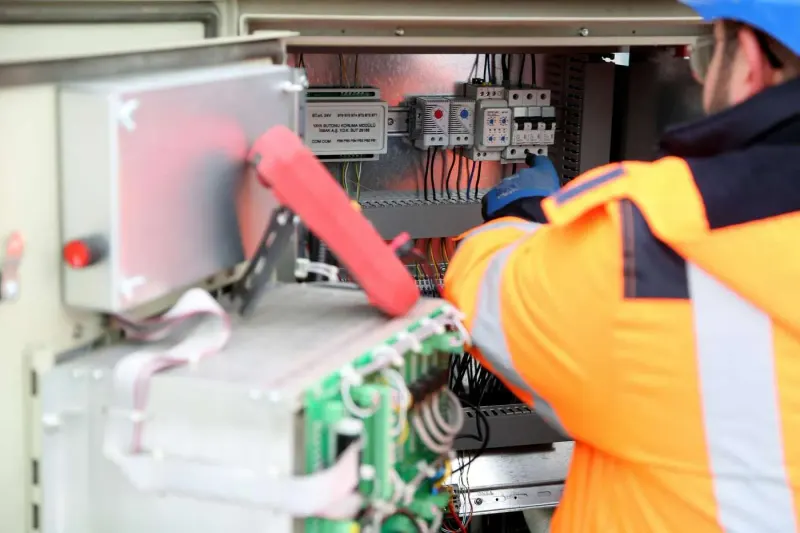
Unplanned downtime costs money. The speed and accuracy of your maintenance team determine how much, and both improve directly with online industrial maintenance training.
Industrial equipment troubleshooting is the process that separates teams who fix problems fast from teams who swap parts and hope. When your techs follow a systematic approach, they find root causes instead of symptoms. That means fewer repeat failures, lower repair costs, and more production time.
ITC Learning has trained 1,000,000+ learners across 6,000+ organizations for more than 50 years.
What Is Industrial Equipment Troubleshooting?
Industrial equipment troubleshooting is a systematic approach to identify, isolate, and repair faults in complex manufacturing systems.
It covers multiple technical domains: mechanical, electrical, fluid power, and automation. Techs observe failure symptoms, use diagnostic tools like multimeters and thermal cameras, and follow technical documentation like schematics and P&IDs to find the exact point of failure.
The goal is to restore the machine to normal operation and identify the underlying cause so it doesn’t happen again.
Industrial Equipment Troubleshooting Tips
Here are things to know when troubleshooting industrial equipment:
Use a Repeatable Diagnostic Logic
Elite techs don’t guess. They use a repeatable method.
The Half-Split method works like this: test the midpoint of the system first. If the signal is good there, the fault is in the second half. If it’s bad, the fault is in the first half. That one test cuts the search area in half immediately.
Another approach is the Input-Process-Output model. When a conveyor stops, verify power first (Input), then check the control logic or VFD (Process), then inspect the motor and gearbox (Output). This prevents your team from replacing a PLC processor when the actual problem was a misaligned photo-eye sensor.
For the full six-step diagnostic methodology, see our guide on the industrial equipment troubleshoot process.
Electrical Fault Diagnosis
Electrical failures cause a large share of unplanned downtime.
Your team needs a “meter-first” mentality. Check for phase imbalance in three-phase motors first. That alone causes excessive heat and premature winding failure more than most techs realize.
In the control cabinet, focus on contactors and relays. A chattering contactor usually signals a voltage drop in the control circuit or a failing coil. Systematic electrical diagnosis tells your team whether the problem sits on the line side or the load side before they touch a single component.
Mechanical and Fluid Power Fault Isolation
Mechanical diagnosis relies on your senses and your tools.
A centrifugal pump with high-frequency vibration and a “marbles in the casing” sound tells you cavitation or bearing wear is the issue. For a detailed breakdown of mechanical failure signatures, see our guide on mechanical failures in industrial equipment.
In hydraulic systems, the diagnosis shifts to pressure and flow. A slow hydraulic cylinder could be a worn piston seal, a clogged suction filter, or a damaged pump. Your team needs to understand the relationship between pressure (force) and flow (speed) to diagnose fluid power issues without tearing apart sealed systems unnecessarily.
Automation: PLCs and VFDs
Modern plants run on PLCs and VFDs. Techs need hardware and software skills to diagnose them.
When a VFD throws an overcurrent fault, your tech must determine if the drive itself is bad, the motor windings are shorted, or a mechanical bind in the driven load caused the spike. That sequence matters. Jumping to the wrong conclusion wastes time and money.
For PLC diagnosis, the I/O module LEDs are your first tool. If a limit switch input light stays off while the switch is physically engaged, the fault is in the field wiring or the switch itself, not the program. For a full breakdown of control system diagnosis, see our guide on troubleshooting of industrial control systems.
Sensor Diagnosis
Industrial sensors fail constantly in harsh plant environments. A bad sensor sends bad data to the PLC, which causes the entire system to behave erratically.
Diagnose sensors by verifying the air gap for inductive sensors, checking for signal drift in analog 4-20mA loops, and confirming 24VDC supply power. These checks take minutes and eliminate hours of unnecessary program analysis.
Predictive Diagnostics
Predictive tools let your team catch failures before they shut down the line:
- Vibration analysis for rotating equipment
- Thermal cameras for electrical connections
- Ultrasonic leak detection for compressed air systems
- Oil analysis for gearboxes and hydraulic pumps
Vibration data can detect a bad bearing in a centrifugal pump weeks before it fails. Techs who know how to interpret this data make maintenance decisions based on facts, not schedules.
Learn more about the causes of industrial equipment failure.
Root Cause Analysis
There’s a difference between fixing a symptom and solving a problem.
Replacing a snapped drive belt is symptom management. Using a laser alignment tool to find out why the belt wore out is root cause analysis (RCA). RCA stops the failure from repeating. For the full RCA methodology, see our guide on root cause analysis for equipment failures.
Measuring Training ROI
Track MTTR and OEE. Those two numbers show you directly whether your troubleshooting training works.
When a tech cuts the time to diagnose a faulty solenoid on a hydraulic manifold from four hours to forty minutes, that’s real money recovered. Accurate diagnosis also eliminates “No Fault Found” returns, where perfectly good parts get replaced and sent for repair unnecessarily.
Recommended ITC Learning Courses
- Troubleshooting Skills: Teaches systematic diagnostic logic and structured problem-solving practices for any equipment type.
- Electrical/Electronic Test Equipment: Covers safe and accurate use of multimeters, meggers, and oscilloscopes for fault diagnosis.
- AC and DC Motors: Builds motor theory and maintenance knowledge for accurate electrical and mechanical fault diagnosis.
- Industrial Hydraulic Power: Covers hydraulic system operation, pressure controls, and actuator diagnostics.
- Rotating Equipment Predictive Maintenance and Alignment: Teaches vibration analysis, shaft alignment, and predictive maintenance practices.
Key Takeaways
- Systematic troubleshooting cuts MTTR and stops parts-swapping.
- Electrical, mechanical, and automation faults each need a different diagnostic approach.
- Root cause analysis stops failures from repeating.
- Diagnostic tools like multimeters and thermal cameras are non-negotiable.
- Workforce skills are the most direct path to plant-wide reliability improvement.