
6-Step Industrial Equipment Troubleshooting Process
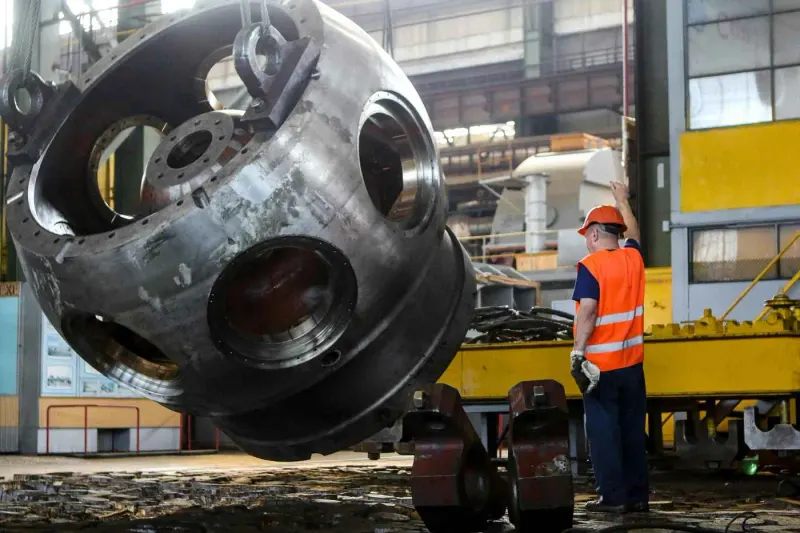
When a critical asset stops, the pressure hits immediately. Without a structured process, techs fall into “shotgunning”: replacing parts at random until something works.
That approach drives up repair costs and extends downtime. A logical, six-step diagnostic framework gives your team a consistent way to find faults in hydraulic presses, CNC machines, and automated conveyor lines.
For more on how this process fits into your broader maintenance strategy, see our industrial equipment troubleshoot guide.
What Is the Industrial Equipment Troubleshooting Process
The industrial equipment troubleshooting process is a six-step methodology to diagnose and resolve industrial equipment failures. It moves from general observation to specific component isolation.
It works across every technical domain. A blown fuse in a motor control center and a pressure drop in a centrifugal pump both follow the same logical path. Standardized process means every tech on your team approaches problems with the same level of rigor, regardless of experience, which is why online industrial maintenance training and online electrical training reinforce it as a foundational skill.
Step 1: Gather Information
Start before you pick up a tool.
Interview the operator: When did it stop? Did you hear anything? Was there a burning smell? Check the HMI for fault codes. Look for obvious signs like a tripped breaker, a loose belt, or a leaking hydraulic hose.
The information you collect here saves you from blind diagnostic work later. Most experienced techs will tell you this step is where the repair actually gets solved.
Step 2: Define the Problem Area
Industrial machines are a collection of subsystems: electrical, mechanical, and fluid power.
You need to determine which one is failing before you test anything. If a VFD-controlled motor won’t run, is the problem the incoming power, the drive’s internal logic, or a mechanical bind in the gearbox?
Use the Half-Split method. Test the midpoint of the system. If the signal is good there, the fault is in the second half. If it’s bad, the fault is in the first half. One test cuts the search area in half.
Step 3: List Probable Causes
Once you’ve identified the subsystem, list the likely culprits.
If a hydraulic cylinder won’t extend, the causes could be a faulty solenoid coil, low fluid level, a blocked suction strainer, or a worn pump. You need this list before you test anything. Otherwise, you test randomly instead of systematically.
For a breakdown of the most common reasons equipment fails, our guide on mechanical failures in industrial equipment covers the mechanical side in depth.
Step 4: Test and Verify
This is where your team’s technical skills show.
Use a multimeter, a pressure gauge, or a thermal camera to test the probable causes you listed in Step 3. Always test non-destructively and follow LOTO procedures. Data-driven testing is the difference between a tech who finds the fault in 20 minutes and one who replaces three parts over two hours.
Step 5: Execute the Repair
Once you’ve confirmed the fault, fix it.
Replace the component, adjust the sensor sensitivity, or clean the clogged filter. The key here is that you already know exactly what the fault is before you touch anything. No guessing. No unnecessary disassembly.
Step 6: Verify and Document
The process isn’t over when the machine starts.
Test the equipment under load to confirm normal operation. Then document everything in your CMMS: what failed, what you found, and what you did. This data feeds your preventive maintenance plans and helps you identify “bad actor” assets that fail more often than they should.
For faults that keep repeating, the next step is a proper root cause investigation. See our guide on root cause analysis for equipment failures.
How This Connects to Control System Faults
Automation faults follow the same six-step logic but add a layer of software diagnosis.
When a PLC input fails to register a sensor signal, your team uses Step 2 to determine if the fault is in the field device, the wiring, or the controller. The process doesn’t change. The tools do. For more on the specific tools and checks needed for PLC and VFD diagnosis, see our guide on troubleshooting of industrial control systems.
Recommended ITC Learning Courses
- Troubleshooting Skills: Covers systematic diagnostic logic and the structured problem-solving practices that underpin every step of this process.
- Electrical Control Equipment: Teaches VFD operation, motor starters, and control circuit fault diagnosis used in Steps 4 and 5.
- Programmable Logic Controllers: Builds PLC I/O diagnostic skills for Step 2 fault domain identification in automated systems.
- Electrical/Electronic Test Equipment: Covers the test instruments your team needs for Step 4 data-driven verification.
Key Takeaways
- A structured process stops expensive, random parts replacement.
- Information collection is the most overlooked part of fault diagnosis.
- The Half-Split method cuts your search area in half with every test.
- Data-driven testing is what separates fast techs from slow ones.
- Documentation feeds long-term reliability improvement.