
Reskilling Your Maintenance Team: A Step-by-Step Framework
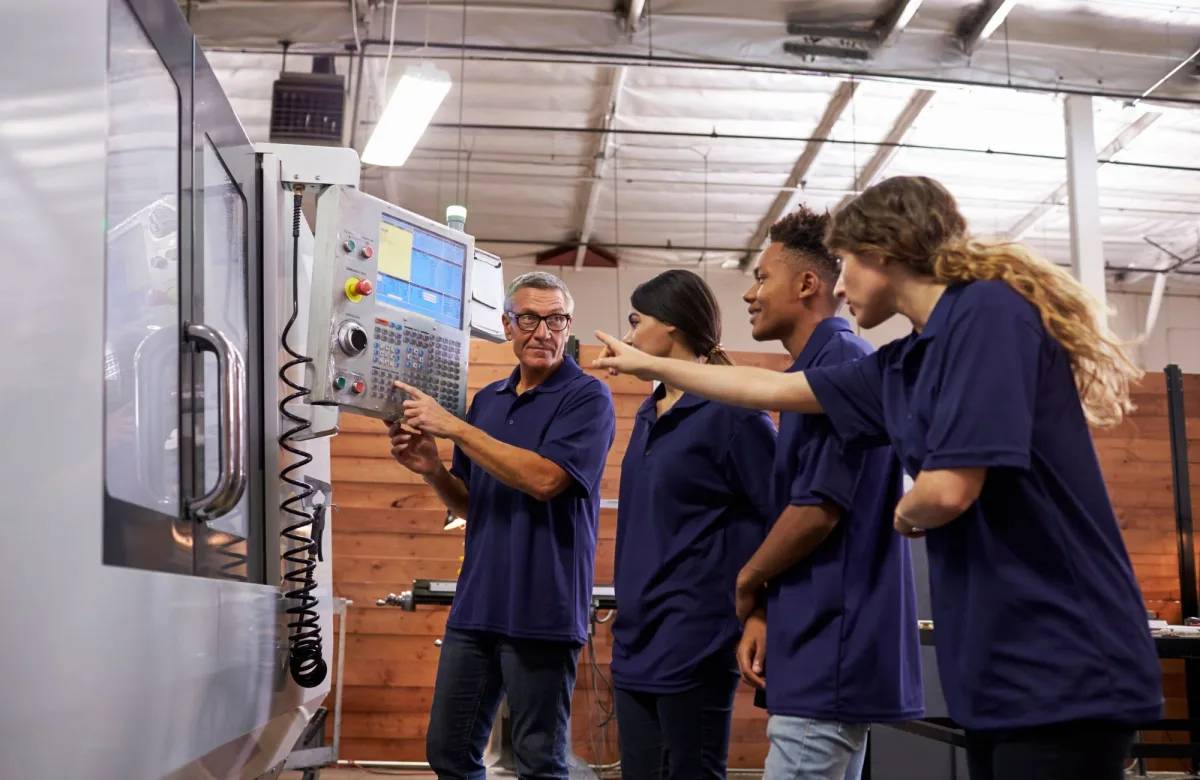
Reskilling helps manufacturers prepare their existing workforce for roles that require new skills. For maintenance teams, it can help fill emerging technical roles with employees who already understand the plant, equipment, and production process.
As technology and business priorities evolve, a strategic reskilling program helps HR directors, operations leaders, and L&D teams connect changing workforce needs with targeted skills development. This five-step framework shows you how to identify future roles and skill needs, assess transferable skills, build targeted training pathways, measure competency gains, and move employees into new roles.
If your organization needs a structured technical training strategy, reskill your workforce with ITC.
What Is Reskilling in Manufacturing?
Reskilling involves teaching employees new skills so they can move into a different role. In manufacturing, it becomes especially important when automation, artificial intelligence, the energy transition, electric vehicle production, or other technological changes reshape existing jobs and create demand for new capabilities.
For example, a machine operator who learns electrical fundamentals, mechanical systems, and preventive maintenance practices to become a maintenance technician is reskilling. A maintenance electrician who develops advanced PLC troubleshooting skills for the same role is upskilling.
| Workforce Strategy | Primary Purpose | Manufacturing Example |
|---|---|---|
| Reskilling | Prepare an employee for a different role | Production operator transitions into maintenance |
| Upskilling | Expand skills within a current role | Maintenance technician learns vibration analysis |
| Cross-training | Build coverage for selected additional tasks | Mechanic learns approved equipment inspection tasks |
| External hiring | Add expertise unavailable internally | Plant hires an experienced controls engineer |
Both upskilling and reskilling support workforce development, but they address different business needs. Before building a training program, determine whether the organization needs to expand an employee’s current capabilities, prepare them for a different role, or add skills that are not available internally.
Why Reskilling Is Important for Maintenance Teams
Manufacturers are adopting connected equipment, robotics, EV technologies, computerized maintenance systems, and AI-supported tools. The World Economic Forum’s Future of Jobs Report 2025 estimates that 39% of workers’ existing skill sets will be transformed or become outdated between 2025 and 2030.
These changes do not always eliminate positions. They can change the tasks employees perform and create demand for new technical capabilities. A factory worker who once monitored a manual process may need to work with automated controls. A mechanical technician may need additional electrical and instrumentation knowledge to maintain integrated equipment.
A strategic reskilling program can help your plant:
-
Fill technical roles from your existing workforce
-
Preserve knowledge of your equipment and production processes
-
Create clear career pathways for capable employees
-
Strengthen coverage for critical maintenance skills
-
Reduce dependence on external hiring
-
Support internal mobility and employee retention
-
Prepare technicians to work with new tools and technologies
-
Build a more agile workforce
Reskilling should support broader workforce development programs that connect recruitment, onboarding, apprenticeships, technical training, succession planning, and long-term business goals.
A Five-Step Framework for Reskilling Your Maintenance Team
A successful reskilling program starts with future workforce demand and ends with verified job performance. Each step should produce a clear decision about what employees need to learn, how they will demonstrate competency, and when they are ready to take on new responsibilities.
Step 1: Identify Future Roles and Skill Needs
Start with the roles and capabilities your facility will need over the next one to three years. Review planned equipment installations, automation projects, retirements, recurring vacancies, production changes, and maintenance performance data.
Bring together leaders from HR, L&D, maintenance, operations, engineering, and safety. This group should answer two questions:
-
Which current roles will change substantially?
-
Which maintenance capabilities will become more important?
Translate these workforce needs into specific job tasks. A plant installing automated packaging equipment, for example, may need technicians who can interpret electrical schematics, test sensors, troubleshoot motor controls, and understand PLC input and output signals.
Create a demand profile for each target role that identifies:
-
Critical job tasks
-
Required technical knowledge
-
Safety responsibilities
-
Expected proficiency levels
-
Equipment-specific requirements
-
Shift and location needs
-
Required licenses or certifications
-
Projected staffing demand
This process keeps your reskilling strategy connected to actual job opportunities and prevents your organization from investing in skills that do not support its business needs.
Step 2: Assess Transferable Skills and Employee Readiness
Next, compare each target role with the existing skills of potential participants. ITC Learning’s skills gap analysis playbook explains how manufacturers can establish competency requirements, assess current capabilities, and prioritize gaps according to operational risk.
Transferable skills may include mechanical knowledge, safe tool use, measurement, blueprint reading, process knowledge, troubleshooting, and maintenance documentation. Experienced operators may already understand how equipment behaves during normal operation, startup, changeovers, and common production disruptions.
Use several forms of evidence:
-
Technical knowledge assessments
-
Supervisor observations
-
Work history and completed training
-
Structured employee interviews
-
Practical demonstrations within current authorization
-
Safety knowledge
-
Career interests and willingness to learn
Self-assessments can reveal confidence and professional development goals, but they should not be the only measure. Combine employee input with demonstrated knowledge and observable performance.
Your organization should also explain the target role clearly. Discuss schedules, physical demands, safety responsibilities, training requirements, compensation, and advancement opportunities before employees commit to a new career path.
Step 3: Build a Role-Based Training Pathway
Turn the identified skill gaps into a structured training pathway. Start with foundational knowledge, then progress to technical instruction, applied practice, and supervised workplace experience.
| Training Stage | Primary Goal | Possible Content |
|---|---|---|
| Foundation | Establish essential knowledge | Industrial math, measurement, safety, tools, and print reading |
| Core systems | Develop technical understanding | Motors, pumps, bearings, electricity, hydraulics, and instrumentation |
| Applied practice | Connect theory with maintenance work | Simulations, troubleshooting exercises, and laboratory activities |
| Role qualification | Verify readiness for assigned tasks | Practical evaluations, supervised work, and task sign-offs |
Online learning platforms can provide consistent instruction across facilities and shifts. However, online courses should complement hands-on experience, facility procedures, job shadowing, and guidance from experienced technicians.
Use the ITC course catalog to map content across electrical, mechanical, instrumentation, industrial safety, PLCs, robotics, and emerging technologies. ITC Learning offers more than 175 courses and 450 lessons, allowing your organization to assign content based on each employee’s starting point and target role.
Each training pathway should define:
-
Required courses and sequence
-
Hands-on practice activities
-
Assigned mentors or coaches
-
Assessment checkpoints
-
Expected completion dates
-
Remediation options
-
Advancement criteria
Not every employee needs reskilling. Some technicians need additional capabilities within their current positions. In those cases, upskilling programs that actually work may be more appropriate than a role transition.
Organizations ready to connect assessments, technical content, and role-based learning pathways can reskill your workforce with ITC.
Step 4: Measure Competency Gain, Not Completion Alone
Course completion shows that an employee participated in training. It does not prove that the employee can perform a maintenance task correctly, safely, and independently.
Measure progress at four levels:
| Measurement Level | Question | Possible Evidence |
|---|---|---|
| Knowledge | Does the employee understand the concept? | Pre- and post-training assessments |
| Application | Can the employee apply that knowledge? | Exercises, simulations, or laboratory work |
| Task performance | Can the employee perform the work correctly? | Practical evaluation and observation |
| Business impact | Does the new capability support plant priorities? | Coverage, quality, response time, or rework trends |
Define competency through observable actions. An employee might progress from identifying motor-control components to interpreting a diagram, testing an approved circuit under supervision, and troubleshooting equipment within assigned responsibilities.
Safety-sensitive work requires additional controls. OSHA’s electrical training requirements under 29 CFR 1910.332 call for training appropriate to the electrical hazards employees may face. Completing a general course does not automatically qualify or authorize a technician for every electrical task.
Useful program measures include:
-
Assessment score improvement
-
Demonstrated competency by skill
-
Program completion rate
-
Placement into target roles
-
Time to supervised and independent performance
-
Retention in the new role
-
Coverage of critical skills across shifts
-
Maintenance quality or repeat-work trends
Connect these measures with business outcomes carefully. Training may contribute to reduced downtime, faster technician ramp-up, safer performance, and stronger equipment reliability. However, asset condition, spare parts, planning, procedures, and operating practices also affect those outcomes.
Step 5: Deploy Employees Through Supervised In-Role Practice
The final step moves employees from structured learning into their new positions. Start with tasks that match demonstrated competency, then increase complexity as employees gain hands-on experience.
A structured deployment process may include:
-
Observe an experienced technician performing the task.
-
Review the procedure, hazards, tools, and decision points.
-
Perform parts of the task under direct supervision.
-
Complete the full task under supervision.
-
Demonstrate consistent performance across several situations.
-
Receive authorization for clearly defined responsibilities.
-
Continue periodic coaching and reassessment.
The U.S. Department of Labor describes Registered Apprenticeship as a pathway that combines paid work, structured on-the-job learning, mentorship, classroom instruction, and a recognized credential. Your reskilling initiative does not have to become a registered apprenticeship, but these elements can provide a useful model for technical skill development.
Receiving supervisors should understand each employee’s completed training, demonstrated skills, current limitations, and required supervision. This information helps the plant assign appropriate work while employees continue developing proficiency.
Common Reskilling Challenges
A strong curriculum can still produce weak results when the organization does not support employees through the transition. Reskilling employees requires more than training courses. It also requires clear job roles, development opportunities, hands-on practice, and a strategic approach to measuring training effectiveness.
Address these common challenges before launching your program:
-
No defined target position: Employees complete training without a clear role or career path waiting for them.
-
Insufficient training time: Production demands repeatedly interrupt courses, practice, and other professional development activities.
-
Generic learning plans: Employees receive the same content despite differences in their existing skills and the skills required for the target role.
-
Limited hands-on experience: Employees understand concepts but cannot yet apply them to workplace tasks.
-
Unsupported mentors: Senior technicians take on coaching responsibilities without clear objectives or adequate time to support continuous learning.
-
Completion-only reporting: Business leaders see course records but no evidence that employees have developed the right skills or can apply them on the job.
-
Premature deployment: Employees take on complex tasks before developing the required proficiency.
Your reskilling strategy should address these risks through clear roles, protected training time, individualized learning paths, practical experience, and measurable qualification criteria. This creates an adaptable workforce that can respond to changing demands while giving employees meaningful opportunities for career advancement.
Supporting Employees Through a Reskilling Transition
Reskilling programs work better when employees understand where the training leads. Explain the target role, required skills, training expectations, schedule, compensation, and advancement opportunities before employees commit to the transition.
Employees can also help identify transferable skills and development interests. Their input should inform the learning pathway, while technical assessments, supervisor observations, and practical demonstrations provide evidence of current competency.
Clear communication helps employees understand what they need to learn, what responsibilities they can take on during training, and how they can progress into the target role.
Build Reskilling Into Your Workforce Strategy
Maintenance reskilling connects your workforce needs with the skills required for future roles. An effective program identifies future roles, assesses transferable capabilities, builds focused training pathways, verifies competency, and supports employees as they transition into new positions.
ITC Learning gives HR, operations, and L&D leaders a scalable way to build technical skills across their workforce. Training is SCORM-compliant and can run through the ITC Learning LMS or your existing learning management system. Request a demo to reskill your workforce with ITC.
Why Organizations Choose ITC Learning
-
50+ years developing skilled-trades training
-
1M+ learners trained
-
175+ courses · 450+ lessons
-
SCORM-compliant · Deliverable via ITC LMS or your existing platform
-
Available in English and Spanish
-
Supports manufacturers, industrial employers, educational institutions, workforce development programs, apprenticeships, and CTE partnerships